Friday, October 16, 2009

On smudged up recipes

JAN: Recently I took on a herculean task: I sorted through all the zillions of recipes in my file folders, armored them in plastic protectors, and organized them in a loose leaf binder.

I hate organizational tasks, so this was really a tedious sacrifice of time for me, but while I was doing it, I noticed that I’d linger over the icky, butter or gravy smudged recipes the longest.


And what was that about?? Fond feelings for my sloppy cooking?

Or maybe it’s because the spotless recipes signify a good concept that doesn’t apply to me. Messy means tried and true. Messy means real life.

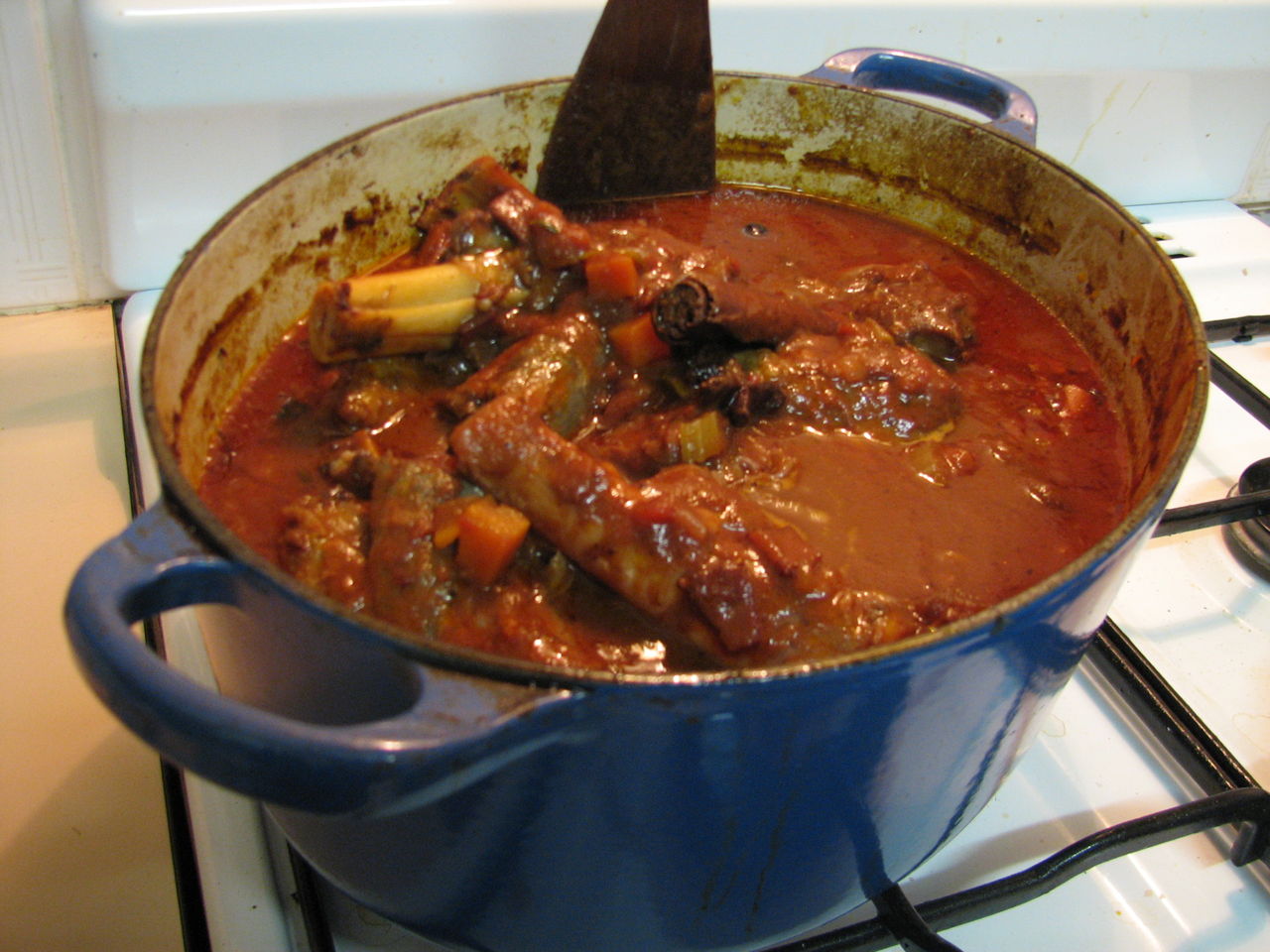
So here are two of my messiest, most loved winter recipes.

Chicken Artichoke Stew:
3 lbs. broiler fryer cut in pieces, or three pounds skinless breasts cut into bite size pieces.
1 med-sized onion chopped
1 tablespoon olive oil
salt and pepper
2 to three cloves of fresh garlic minced or pressed
1 large can (16 ounces) crushed tomatoes.
1 8-ounce can diced tomatoes.
small can of tomato paste
1 tablespoon cinnamon
2 tablespoons honey
1 package frozen articholes thawed and chopped or a large can of articoke hearts quartered.
2 to three carrots peeled and chopped into small slices
1/2 lemon squeezed.
Sautee onions and garlic in a Dutch Oven or Stewpot in olive oi. Add childen and brown on both sides. Add all the rest of the ingredients except the squeezed lemon and artichokes and cook for forty five minutes to an hour on medium or medium low. Add artichokes and cook ten minutes more. Add lemon and take off the heat. Serve over pasta or rice or serve as a stew with a loaf of French bread.
Hot Ham in a crockpot
I'm not a big ham fan. I buy it once or twice a year because I need the ham bone for pea soup and I can never find one. So I buy the smallest but-end fully cooked ham I can find and take three quarters of the meat off of it. Probably a pound or two.
Then I take a crockpot (or you can use a dutch oven) and sprinkle olive oil on the bottom.
I peel and slice four to six potatoes, and slice three carrots. I slice a bulb of fennel (you can use celery instead) and chop half an onion (1/2 cup). For fun, I like to add two jalapeno peppers (optional) I layer this on the bottom of the crockpot, sprinking with salt, peppper and a mixture of 1/4 cup olive oil and 1 tablespoon of butter.
I cut the ham into medium sized hunks and put that on top. I mix two tsp. of brown sugar into ten ounces of low fat chicken broth and add to the concoction. In a crockpot, I cook it on high for four to five hours. In a Dutch Oven, I'd cook it on medium low for an hour or so. Ten minutes before serving, I add a half cup of light sour cream and I serve with sour dough bread. It's amazingly delicious -- even if you don't like ham!
Anyone else have an messy, winter recipes to share ?

Thursday, October 15, 2009

On bibliophiles


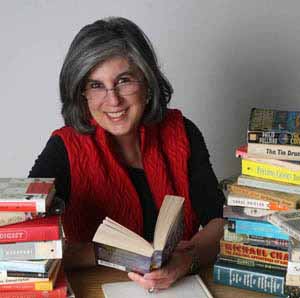
The one thing everyone knows about Hallie is that she loves books.

Her latest, “The Bibliophile’s Devotional,” out in book stores now, offers the reader an inspiration from literature for every day of the year.

Each day we get an engaging plot summary, great opening lines, and more important the real DIRT – the facts and gossip -- behind the books we’ve always loved.

JAN: Hallie tell us about the book.

HALLIE: I love your description – plot summary, opening lines, and some interesting behind-the-book tidbits. I was limited to just one page per book, so for some books it was particularly challenging. Try summarizing War and Peace in three paragraphs!

JAN: And the process for collecting the many choices and making the selections. Is there any correlation between the book chosen and time of year? Holiday??

HALLIE: Sometimes. Just for example…

January 1, WHITE TEETH by Zadie Smith (It opens on New Year’s Day, 1975 with hapless Archibald Jones trying to gas himself; it New Years Eve, 1992, when Archie “accidentally” releases a mutant mouse programmed to do away with the randomness of creation.)

July 4, INDEPENDENCE DAY by Richard Ford (On July 4 Frank Bascombe takes his troubled son on a trip to a sports hall of fame; at a baseball field he’s struck by a lightning bolt.)

September 2, GONE WITH THE WIND by Margaret Mitchell (On September 2, 1864, the Union troops occupied Atlanta. In the ovel that’s where Scarlett, one of literature’s most greedy and self-centered creatures, finds redemption.)

JAN: How long did it take you to research these books and how did you find the gossip and fact behind the stories.

HALLIE: It took the better part of a year. It was a little easier than it might have been because I was just coming off writing 1001 BOOKS FOR EVERY MOOD so I had a tiny head start in the research department.

I found the gossip and facts in newspaper archives, in biographies and memoirs, in the introductions and prefaces of modern editions of old books.

JAN: What’s are some of your favorites?

HALLIE: I had the most fun with this part. Here’s a few –

- Some of Margaret Mitchell 1,000-plus page manuscript of GONE WITH THE WIND was typewritten, some handwritten, some of it scribbled on the backs of laundry lists when she showed it to H. L. Latham, editor at the MacMillan copmany.

- After the publication of Upton Sinclair’s THE JUNGLE with its expose of the meatpacking industry, foreign sales of American meat plummeted. To allay the public’s fears, the meatpacking industry itself lobbied for passage of the landmark federal food safety law which took effect in 1907.

- When Eli Wiesel completed NIGHT--his account of four years in Buchenwald concentration camp, his family’s only survivor--the only holocaust literature published to date was “The Diary of Anne Frank.” More than 15 publishers turned “Night” down before it found a small press willing to take the gamble. It went on to spend 80 weeks on the NY Times bestseller list and started a new genre of holocaust survivor literature.

- Dashiell Hammett loosely based THE MALTESE FALCON on the Sonoma Gold Specie case to which he was assigned as a Pinkerton detective before he became a writer. Within a decade the book had been made into three films.

Today we're talking about books, tomorrow come back to talk about food. It's already cold and dark in New England and Jan will be talking about her favorite winter recipes.


Wednesday, October 14, 2009

Mark Arsenault

JAN: Our guest blogger today is Mark Arsenault, a terrific writer I met through the Providence Journal, where we both worked as reporters, but at different times.

I knew he was a Shamus-nominated mystery writer. I might have guessed that he is a runner, hiker, and political junkie. But it came as a surprise that he's also an eBay fanatic who collects memorabilia from the 1939 New York World’s Fair.

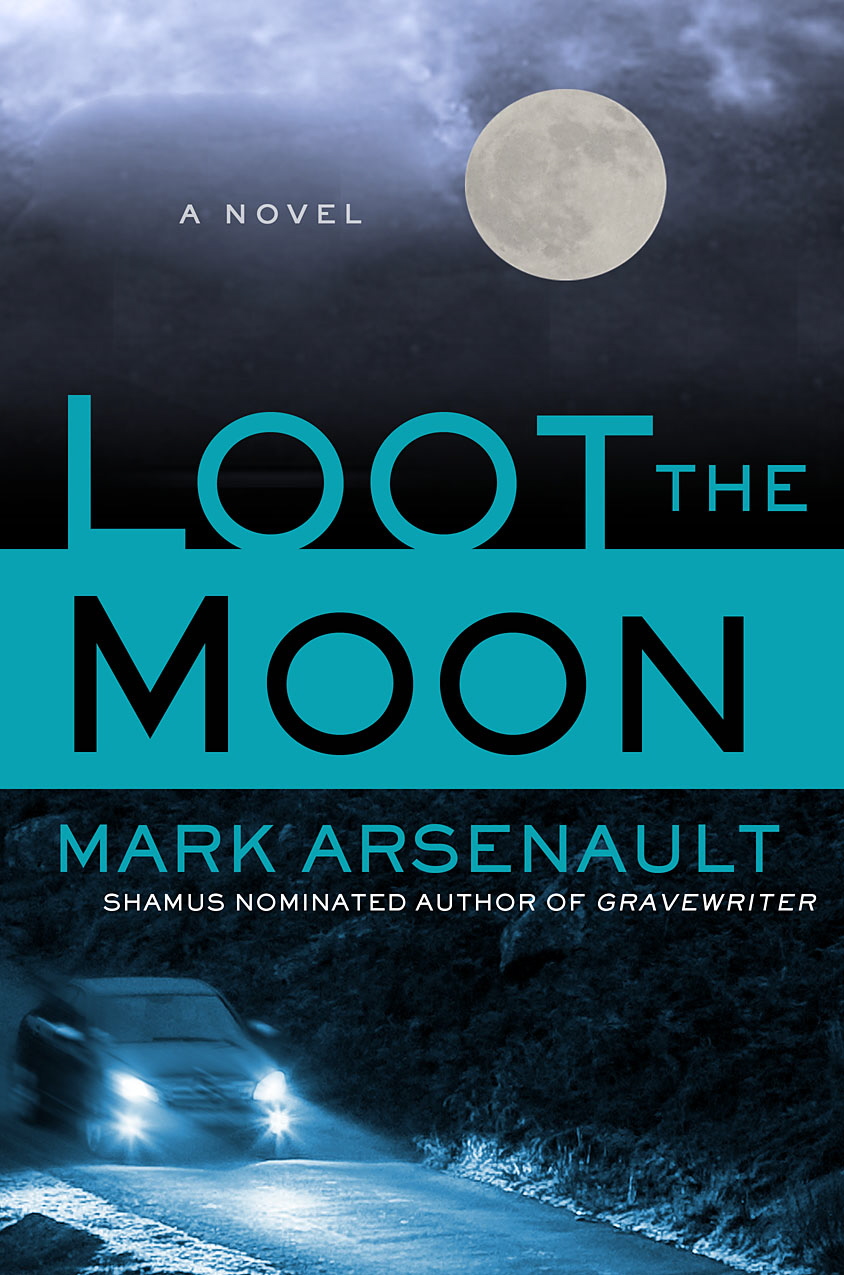
His new novel is LOOT THE MOON, the second book in the Billy Povich series that began with GRAVEWRITER, a noir thriller that intrigued me with rich characters and kept me on the edge of my seat It's also been praised for a fusion of suspense, humor and human tenderness.

He used to write a terrific column on writing for the ProJo and we are lucky to get some of his insight here.


Writing on Faith


Writing is one of the hardest things in the world to start, especially if nobody cares if you finish.

When I began my first mystery, I had no idea if I could even write a novel, much less get it published. But we have to find the faith to write, even if there’s no guarantee the project will ever sell.

After four books and 20 years working for newspapers, now I write mainly to meet deadline, but it wasn’t always that way. I used to write on faith. And recently, I’ve been doing it again.

My wife, Jennifer, has an estranged brother she hasn’t seen or heard from in nearly 20 years. For many of those years, the family didn’t know where he was, or even if he was alive.
But the Internet makes it hard to hide, and several years ago we bird-dogged his on-line footprint and tracked him down to a city on the West coast.

We found where he had posted condolences on a memorial page for a friend who had died. He had made a few political donations, bought some real estate, and had apparently gotten married. We couldn’t manage to make contact, but we were cheered that he was alive and living what seemed a normal and healthy life, which we followed from 3,000 miles away through the tiny impressions he left in a living, growing Web that sees all and never forgets.

Then a few months ago, seemingly from nowhere, the wife of the brother-in-law I have never met reached out to the rest of the family by email.

This shocking, generous gesture, and the possibility of reconciliation, left my mother-in-law in tears. More emails, with pictures attached, zipped back and forth across the country for several days. My mother-in-law saw a digital photo of a grandson she never knew she had.

But this story is not a Hallmark card.

After a few days, my brother-in-law’s wife confessed she had contacted us in secret. The brother who had vanished nearly two decades ago didn’t know. She promised to get some advice from her clergy, and then break the news to her husband.

We never got another email from her.

This is where writing on faith is important. She doesn’t email us, but we still email her.


Every few weeks, I dash off a personal note to share with her the exciting things in our lives and to bore her with the mundane parts, as you’re supposed to do with family. I never mention the estrangement, the lack of contact—none of that. My emails read like Facebook notes between old friends, even though the notes only go one way.

I sent our Las Vegas wedding picture and a funny story about the pastor we hired sight-unseen off the Internet. A few weeks ago, I sent a full report on my brother’s nuptials in Ireland this summer, including pictures of pubs and green fields dotted with sheep. Most recently, I sent a copy of the cover art for my new novel. (A 20-year estrangement is no excuse not to support your family and buy a copy.)

I don’t expect a reply. I just fire these notes into the ether. The emails don’t bounce back, so maybe they’re reading them. Maybe they’re keeping tabs on us over the Internet, as we did with them.

When you write even when you can’t be sure anything good will come of it, you’re writing for love. That’s the second-best reason to write, just behind writing for deadline.
So has anybody else tried something unique to reach somebody who didn’t want to be reached?

With 20 years of experience as a print reporter, Arsenault is one of those weird cranks who still prefers to read the news on paper. His Web site is: http://markarsenault.net/

JAN: Come back tomorrow when I get Hallie to tell us how she put together her new book, THE BIBLIOPHILE'S DEVOTIONAL.